
The Complete Record
The Full Story
A comprehensive account of Bank of Ireland's role in the tracker mortgage scandal, from the origins of the crisis to the continued loss of family homes
Section 01
The Scandal
The tracker-mortgage scandal is a sector wide issue that has bedevilled Irish banking, triggering significant harm and financial loss to thousands of customers. As the bank that caused the greatest number of homes to be lost and the largest number of harmed customers, Bank of Ireland received a record fine of over €100 million.
This site documents the leading role of Bank of Ireland in the most significant consumer-protection failure in Irish history, including the continued loss of family homes as a result of Bank of Ireland mortgage overcharging and incorrect mortgage redemption figures.
This site brings together many of the human stories, regulatory findings, leadership problems and unresolved issues surrounding Bank of Ireland's failings in the tracker mortgage scandal. It outlines what happened and why some families are still dealing with the consequences of Bank of Ireland's continued refusal to ensure adequate redress.
It also considers the reputational damage Bank of Ireland suffers due to widely reported staff comments denigrating some of those who fought for justice for the bank's customers. In the context of recent cases of lost homes, it highlights current leadership failures at Bank of Ireland.
It concludes with timely consumer advice to anyone considering a mortgage with Bank of Ireland and what steps to take to avoid a possible recurrence of the harm and losses suffered by others, including the possible loss of their home.
A story of banking failure
What began as unclear documentation and misinterpreted mortgage terms evolved, over two decades, into a cascade of decisions and omissions by Bank of Ireland that continues to upend the lives of thousands of customers. Families were pushed into financial stress. Tragically, some lost homes they should never have lost. Many carried widely reported health and emotional burdens due to errors and poor decision making in Bank of Ireland that went unaddressed for years. In some cases the harm and loss of homes continues.
Without the intervention of a small number of individuals, such behaviour at both Bank of Ireland and across the wider sector could have been far worse. Financial adviser Padraic Kissane was the first to flag the poor behaviour of the banks. Others including journalist Charlie Weston and former Chair of the Oireachtas Finance Committee, John McGuinness TD, were instrumental in driving public awareness of the industry wide scandal which has been likened to the Post Office scandal in the UK.
Bank of Ireland hit with record fine
The Central Bank of Ireland eventually intervened with its largest ever consumer-protection fine. In the biggest case, that of Bank of Ireland, its investigation revealed a bank that issued confusing documents, interpreted ambiguity in its own favour, and persistently failed to protect customers as harm accumulated. Bank of Ireland ultimately admitted eighty-one regulatory breaches affecting almost sixteen thousand accounts. These failings are systemic, persistent, and deeply damaging.
Even now, years after the first enforcement action, some customers have been compelled to bring their cases to the courts because of the bank's continued poor behaviour. These include marital failure as a result of financial harm, serious health impacts, financial loss, damage to small businesses, credit issues, underfunded pensions, and disturbingly, the continued avoidable loss of family homes.
These cases raise serious questions about the present leadership and governance of Bank of Ireland under CEO Myles O' Grady. In one case, the CEO was personally alerted to the underlying mortgage overcharge and litany of harmful issues well before the property was sold.
Despite this, he chose to deny the problem, and the property and a small business were subsequently lost as a direct result of threats to repossess the home - despite Bank of Ireland overcharging the customer at the time. Serious questions for the CEO and Bank of Ireland board about the mortgage and the correct redemption figure remain unresolved.
The documented handling of this case asks serious questions of Myles O’ Grady and his leadership team: what were they told, what action did they take, and why is the harm continuing?
This site examines the gap between the public commitments of Bank of Ireland and the reality faced by some of its customers. It seeks to preserve a clear, accessible record of what is, in some cases, continued poor behaviour to ensure that the harm is neither forgotten nor dismissed.
And it considers the governance failures that for some impacted customers remain a feature of Bank of Ireland's leadership today
Continuing cultural problems
It also highlights the widely reported and continued cultural problems at Bank of Ireland. In particular, it records the hugely negative comments made by Bank of Ireland staff about those who advocated for consumers faced with systemic harm. As recently as January 2026, Bank of Ireland was forced to issue a public apology and agreed an out-of-court settlement when the case was listed for a potentially highly damaging High Court hearing.
By setting out the facts in a clear and comprehensive way, this site supports customers, policymakers and the public in understanding such failures and why the harm continues. In particular, it serves as a timely reminder for Bank of Ireland personal and business customers and mortgage applicants of how Bank of Ireland treats those forced to fight for fair and reasonable redress as a result of the bank's failures.
Moreover, it shows that even in the face of documented systemic failure and the direction of the Central Bank of Ireland to ‘Stop The Harm’, the Board of Bank of Ireland will take refuge in legal process to avoid doing the right thing, causing protracted severe harm to some of its customers.
Section 02
The Human Cost
The tracker mortgage scandal at Bank of Ireland is often described in official language that describes contract ambiguity, misapplied margins, and remediation frameworks. But the reality for customers is more personal. Their lives are shaped by false repayment schedules they could not control, by error ridden communication, erroneous and aggressive threats of repossession and by the erosion of financial security.
Homes lost
The Central Bank's investigation confirmed the scale of the damage caused by Bank of Ireland. At least twenty families lost the homes they lived in, and twenty-five more lost rental properties, including cases where Bank of Ireland's own staff were misled by their employer's unclear documentation. In one instance, an employee relied on the bank's written explanation of how trackers worked, only for the bank to later admit that the wording was not clear. By the time the truth emerged, the family home was gone.
These issues arose from poor decisions by Bank of Ireland senior management, along with documentation the regulator described as contradictory and confusing. In other cases, no apparent due diligence was done on mortgages bought in 2023 from KBC, despite its record of unconscionable harm and overcharging, resulting in Bank of Ireland continuing to overcharge transferring customers - leading to significant harm and the loss of a family home.
A litany of harm
The financial harm reached far beyond the cases where homes are being lost. Nearly sixteen thousand accounts were affected, and some hard pressed families were forced to pay tens of thousands in overcharged interest while under threat of losing their homes if they did not meet Bank of Ireland's persistently incorrect payment demands.
Families depleted savings built up over years. Others relied on loans, credit cards or family support to cope with falsely inflated repayments. For many, future plans, from education funds to pension contributions, were destroyed to compensate for errors made by Bank of Ireland. In some cases, the harm continues.
The emotional toll is harder to measure but no less real. The Central Bank of Ireland recorded repeated accounts of customers who lived for years under strain due to the bank's actions. Bank of Ireland failed to disclose to customers who contacted them seeking to sell their properties or requesting redemption figures that they may be impacted under the Tracker Mortgage Examination and due redress and compensation.
Tragically these customers made uninformed decisions relating to their mortgages, causing the loss of properties, including the family home.
The delays in acknowledging harm allowed it to accumulate. Customers repeatedly contacted the bank long before the regulator intervened only to be told their documents were clear, that their tracker mortgage rate entitlements were lost, or that they were correctly classified.
The Central Bank of Ireland’s published decisions show how this harm played out in real lives. Disturbingly, The Central Bank found that Bank of Ireland’s Court of Directors made decisions about whether disputed groups of tracker customers were affected “in the absence of key material information” necessary to make an informed decision under the Tracker Mortgage Examination framework.
In more recent cases, Bank of Ireland’s current Board appear to be trying to distance itself from continuing tracker-related harm by characterising individual cases as legal disputes.
Where the Board has been placed on notice of severe impacts of overcharging, an significantly overstated redemption position and the subsequent loss of a family property, it has a responsibility to ensure that the matter is independently examined and that further harm is stopped.
Failure to do so raises serious questions about whether the governance and cultural lessons identified so starkly by the Central Bank have genuinely been learned and the extent of current Central Bank oversight of Bank of Ireland. Some of those harmed by Bank of Ireland note the comments of Taoiseach Micheal Martin who said “The banks essentially stole people’s money. They caused enormous damage to people’s lives and a great deal of distress to families.”
Speaking in Dail Éireann in the past year, Tanaiste and Minister for Finance Simon Harris TD has acknowledged that lenders’ tracker-mortgage failures caused significant distress and, in some cases, “devastating consequences for customers”. Tracker scandal victims say Bank of Ireland’s current Board must explain how its continued handling of a case involving an overcharge, threats of repossession, the sale of a family property under duress and serious continuing harm is consistent with the public statements of the Taoiseach and Tanaiste or with the lessons the bank claims to have learned.
Due diligence failures on KBC loans
When Bank of Ireland acquired the Belgian-owned KBC Bank Irish mortgage portfolio in February 2023, an error affected approximately 35,000 transferred mortgage accounts. KBC had left the Irish market in the shadow of their own hugely damaging tracker misbehaviour.
Incorrect mortgage start dates were entered by Bank of Ireland into its systems, leading the bank to withhold information from the Central Credit Register while the records were corrected. This was not an isolated failure. Bank of Ireland had already been fined €24.5 million for serious IT service continuity and internal-control failings, and €463,000 following earlier Central Credit Register reporting failures affecting approximately 47,000 customers. The Bank of Ireland transfer error raises further questions about the bank’s systems, operational controls and due diligence.
In some cases, customers who were transferred to Bank of Ireland from KBC report significant health, marital, business and financial harm due to overcharging. They speak of a continued denial of issues from Bank of Ireland senior leadership and Board members, even in the face of overwhelming evidence that insufficient due diligence was conducted by Bank of Ireland on its purchase of overcharged mortgages in the KBC loan book.
They highlight the sustained harm done to their own small business by Bank of Ireland’s behaviour, including admitted false credit issues being shared by Bank of Ireland with the Central Credit Register (CCR) resulting in catastrophic damage and the continued denial of credit before and during 2026 as a result of these persistent failures.
Tragically, they also record a business being forced to close completely unnecessarily as a result of persistently poor behaviour by Bank of Ireland. Disturbingly, prior to any litigation, and despite repeated pleas in writing to CEO Myles O’ Grady, they recount a pattern of documented and adamant refusals by the Bank to meet with them - despite a litany of financial harm and their documented ill health. Meanwhile Bank of Ireland was threatening to repossess the property - even though at the time Bank of Ireland was overcharging the borrower.
They note that Bank of Ireland, with the full knowledge and oversight of its Board, led by Chair Akshaya Bhargava and Independent Director Michele Greene continues to pursue an aggressive and resource-intensive defensive legal strategy, in what they say appears to them to be a deliberate attempt to weaken the ability of small-business and individual litigants to pursue legitimate claims to a conclusion.
Such examples of the adversarial culture faced by those who challenge Bank of Ireland, seemingly contradict the many public pronouncements of CEO Myles O’ Grady about trust and accountability - all the while asking serious questions of Board effectiveness.
CASE STUDY
Being Hunted for the Family Home by Bank of Ireland
RTÉ’s Trackers: The People v The Banks lays bare the devastating human cost of the tracker mortgage scandal through the deeply disturbing story of John and Claire O’Leary.
Claire, a Bank of Ireland employee, and her husband John O’Leary, who had previously worked at the bank, were overcharged by as much as €1,400 per month on their mortgage, a level they described as impossible to sustain. Despite Claire working at Bank of Ireland, they were not immune to the harm and cultural failings that led to so much human misery. They described in the programme how they exhausted every penny of their savings, were forced by Bank of Ireland to sell their original apartment in Dublin and saw the affordability of their family home in Wexford turned into a living nightmare.
Going without dinner
The bank’s intervention extended to intrusive scrutiny of their daily finances, including demands for itemised shopping bills, while the couple recounted periods when money was so tight that they went without dinner so their children could eat. The pressure culminated in Bank of Ireland seeking a repossession order on their Wexford family home, issuing an eviction date, and forcing the traumatised family into rented accommodation. Sadly but understandably, the couple told RTE that they felt compelled to hide from their children the reasons for the move in order to protect them.
Relentless financial pressure from the bank
The couple also described the “horrific shame” of the experience and the feeling that Bank of Ireland had “hunted them for their family home”. Under relentless financial and emotional pressure, they were ultimately forced to file for bankruptcy, and the family home was left derelict as a direct consequence of the bank’s actions.
Bank of Ireland was eventually forced to admit its horrific error, the compensation offered was, in the context of the scale of the damage caused, completely derisory. The O’Leary’s’ four-year battle to regain their home stands as one of the most powerful illustrations of the scandal’s lasting impact. Credit is due to Padraic Kissane, who played a key role in supporting Bank of Ireland staff, many of whom were reported by The Irish Times of being ‘afraid of speaking out’ for fear of losing their jobs.
Meanwhile tragically, some were not able to find resolution in time. Bank of Ireland’s behaviour forced other customers to sell homes after false affordability scenarios were imposed on innocent families. For many, the consequences of Bank of Ireland’s behaviour continue to this day. A situation exacerbated given the highly publicised cultural failings taking place under the leadership of current CEO Myles O’ Grady, Chair Akshaya Bhargava and the Board.
Section 03
Regulatory Findings
The Central Bank of Ireland's investigation into Bank of Ireland revealed a long sequence of failures that were neither incidental nor isolated. They formed a pattern that allowed harm to deepen for years before it was acknowledged. When the investigation concluded, the regulator issued the largest consumer-protection fine in Irish history and confirmed that nearly sixteen thousand customers had been affected.
Bank of Ireland admitted eighty-one regulatory breaches. Such findings explained why customers endured years of overcharging, anxiety, and, in some cases, the loss of their homes.
Persistent failings
A central failing lay in the bank's own paperwork. The Central Bank found that Bank of Ireland issued mortgage documentation that was unclear, contradictory or incomplete. Customers were led to believe that certain decisions such as entering a fixed rate were temporary arrangements, when the bank would later interpret them as permanent forfeitures of tracker rights. Many customers believed they could return to their tracker after a fixed period. Others did not realise that breaking a fixed rate or restructuring a loan could have life-long consequences. The regulator concluded that ambiguity in these documents contributed directly to customer harm.
Suiting itself
Rather than address uncertainty in a way that protected borrowers, the bank routinely adopted interpretations that strengthened its own position. This pattern became a defining theme of the investigation. The regulator stated that Bank of Ireland “knew or ought to have known” that its documentation was unclear yet continued to use narrow readings that denied customers their entitlements. These decisions had real consequences as families paid overcharged interest for years. Savings were depleted and homes were sold under pressure that should never have existed.
Unfair practices
The review also exposed serious weaknesses in how Bank of Ireland handled complaints. As noted, customers who pushed their cases, sometimes repeatedly, were more likely to have their entitlements reconsidered. Others, with identical documentation, were left on the wrong rates because they accepted the bank’s initial explanation. The Central Bank described this pattern as an “unfair complaints handling practice.” This had lasting consequences as those who trusted the bank’s first response often endured the greatest harm, and some are still seeking recognition today.
Bank of Ireland failures
Another critical issue was the bank’s failure to identify the full range of affected customers. The most prominent example was the group known as the “disputed cohorts,” comprising more than five thousand borrowers whom the bank initially insisted were not impacted. The Central Bank strongly challenged this assessment. Only after sustained regulatory pressure did Bank of Ireland expand its review, by which time many customers had continued paying incorrect rates for years. Some had already lost homes while others struggled through ongoing financial strain.
Systemic shortcomings also contributed to the scale of the problem. Internal controls failed to detect errors and systems were not equipped to identify customers who should have been on trackers or to flag inappropriate rate assignments. While customers were struggling, Bank of Ireland insisted its processes were working. The regulator’s findings demonstrated that they were not and had not been for some time. These weaknesses were not simply historical issues, they impacted customer outcomes even when the Examination was underway.
Irreversible harm
The Central Bank’s “Stop the Harm” principle required banks to halt ongoing damage the moment they became aware of it. As the record shows, Bank of Ireland still does not meet that standard. Customers remained on incorrect rates even after evidence emerged internally that errors had occurred. Redress and restoration were delayed. In cases where homes were lost, the harm became irreversible long before the bank acknowledged its mistake. The regulator’s language made clear that many of these losses could and should have been prevented had the bank acted sooner.
These findings tell a story of structural weakness, institutional defensiveness and missed opportunities to prevent harm. They also explain why some customers are still seeking answers of a Board and its Non-executive Directors who seem to some to be resolutely opposed to complying with Central Bank of Ireland directives to “Stop the Harm." The investigation did not merely document what went wrong in the past; it exposed the causes of the hardship that continues to impact the lives of those affected.
Cultural problems at Bank of Ireland
Undoubtedly one of the most shocking contradictions between what the Board says and how the bank acts became more visible after the RTÉ documentary Trackers: The People v The Banks. The programme, broadcast in late 2025, highlighted the continuing impact of the scandal on families and the slow, often painful path toward resolution. Reports emerged that internal messages on a Bank of Ireland staff platform mocked campaigner Padraic Kissane and referenced the tracker-mortgage controversy following RTÉ's documentary coverage. The incident prompted political reaction, with the then Finance Minister Paschal Donohoe stating he was "disappointed" by the reported comments and emphasising the seriousness of the tracker-mortgage scandal for affected borrowers.
Political Reaction to Tracker Mortgage Scandal and Cultural Problems at Bank of Ireland
"The consequences and repercussions of it continue to be very real for some within our country."
“Utterly inappropriate.”
—Minister for Finance Paschal Donohoe TD , November 2025
Bank of Ireland described the internal remarks as "completely unacceptable" and confirmed it had launched a formal investigation. The episode reignited wider political and public concern about an ongoing negative culture and accountability in the context of the tracker mortgage scandal.
Padraic Kissane told The Business Post, which first reported the story, that he was "upset, hurt and angered" by the posts, and said one of them was "appalling". To date none of the findings have been made public.
Who is in charge?
The current Board of Bank of Ireland is responsible, not for creating the bank's role in the tracker mortgage scandal, but for confronting the continued damage and failing to 'Stop the Harm' in unresolved cases and where homes continue to be lost under its leadership. Moreover, continued high profile public apologies and out of court settlements for derogatory comments by staff about third parties indicate that Bank of Ireland still has work to do.
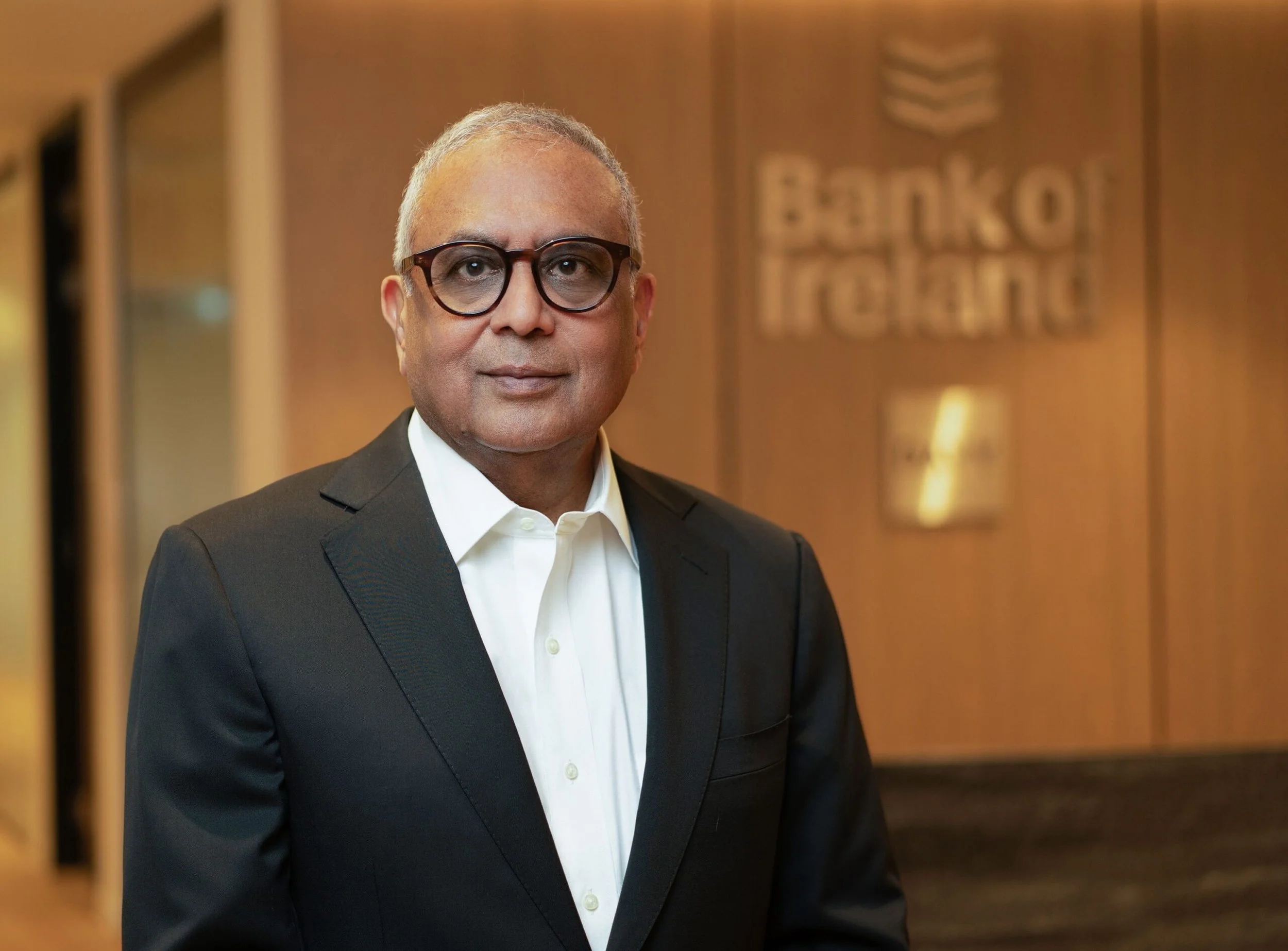
Akshaya Bhargava
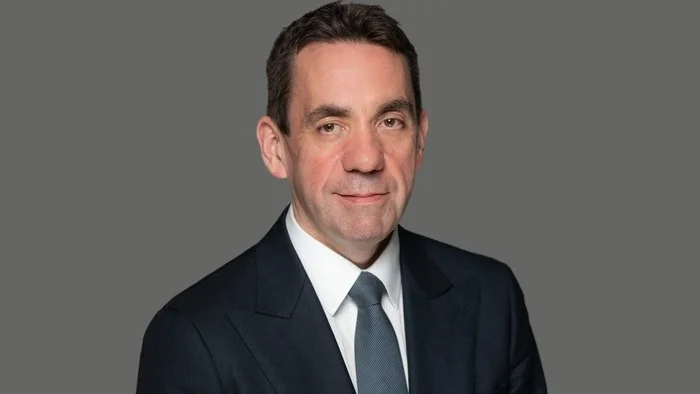
Myles O’ Grady

Mark Spain
Chair: Akshaya Bhargava
The bank's Chair, Akshaya Bhargava, appointed in 2025, reportedly brings decades of experience in global financial services and digital transformation. His leadership is intended to represent a break from past practices and a renewed focus on customer trust. Yet those affected by the loss of their homes as a result of tracker issues still face damaging consequences and continued problems under Mr. Bhargava’s leadership. Their ongoing struggles suggest that while Bank of Ireland has changed its leadership, reported failings remain active and seriously unaddressed .
CEO: Myles O’ Grady
Chief Executive Myles O' Grady, who assumed the role in 2022, has consistently emphasised fairness and responsibility in his public messaging. As a former Chief Financial Officer when elements of the tracker mortgage scandal were under scrutiny, his leadership places him at the centre of the bank's efforts to reconcile its actual behaviours with its commitments.
Customers still experiencing harm report watching closely how Bank of Ireland responds to the continued loss of family homes, as for them, the bank's culture isn’t defined by PR statements but by its behaviour in their individual cases. This is especially so when the CEO had received written evidence shared with him of calculation and overcharge problems on mortgages bought from KBC, which Bank of Ireland denied, yet ultimately resulted in the loss of property and other severe harm. Moreover, under Myles O’ Grady’s leadership, Bank of Ireland continued to overcharge the customer and threaten repossession of the home.
CFO: Mark Spain
Group Chief Financial Officer Mark Spain oversees financial reporting and ensures the accuracy of provisions and disclosures to regulators and investors. For customers suffering from the impact of grossly inflated and inaccurate redemption figures and apparent due diligence failures, it inevitably raises questions for the CFO about whether financial governance has evolved enough to ensure that all harm is properly understood and finally curtailed.
Non-Executive Directors
The independent non-executive directors on the Board hold key oversight roles in challenging management, scrutinising risk and ensuring the interests of customers are protected, even when doing so is inconvenient or costly. Several directors bring backgrounds in risk and compliance, European banking and operational transformation.
These are precisely the areas that show weaknesses, and where in some cases Bank of Ireland's behaviour in the tracker mortgage scandal continues to cause harm. Their presence signals apparently stronger governance, yet unresolved cases and reported cultural difficulties highlighted in the media, suggests the Board is struggling with embedding customer-focused decision-making in the management team.
The Board's responsibility is to ensure that these customers are no longer caught in systems that fail to protect them. The fact that in some cases the current Board continues to rely on legal cases where homes have been lost, has raised serious questions about their committent to fair resolution.
The central governance question for the Board in 2026 is simple: why is it failing to ensure that customers are no longer suffering continued harm from failures for which the Bank is responsible?

Pascal Boillat
Michele Greene is Deputy Chair and Senior Independent Director (appointed 2019), with responsibility for supporting board governance and providing an additional channel for independent oversight.

Michele Greene
Non-Executive Director (appointed 2026), Pascal Boillat is currently Chief Operating Officer with the London Stock Exchange Group with experience in financial services and technology.

Non-Executive Director (appointed 2018), Steve Pateman brings board oversight with experience in banking, lending and customer operations.

Steve Pateman
Non-Executive Director (appointed 2025), Hans van der Noordaa brings board oversight with experience in international banking and financial services.

Hans van der Noordaa
Non-Executive Director (appointed 2020), Giles Andrews contributes to board oversight with experience in financial services, technology and strategic development.

Giles Andrews
Non-Executive Director (appointed 2025), Emer Finnan contributes to board oversight with experience in legal, regulatory and governance matters.

Emer Finnan
Non-Executive Director (appointed 2025), Niamh Marshall contributes to board oversight with experience in financial services, investment and governance.

Niamh Marshall
Non-Executive Director (appointed 2023), Margaret Sweeney contributes to board oversight with experience in financial services, accounting and audit.

Margaret Sweeney
Questions for the Board of Bank of Ireland
The central governance question for the Board in 2026 is a simple one: why is it failing to ensure that customers are no longer suffering continuing harm from failures for which the Bank is responsible?
Akshaya Bhargava
"As much as banks would like the closure of the last tracker enforcement case against a firm to draw a line under the debacle, this must not happen. The weight of responsibility now lies on the Central Bank to hold to account those banking executive , past and present, who were involved in breaches."
The Irish Times, on the Tracker Mortgage Scandal, September 2022
"The template has long been set: lessons have been learned; they are now more customer-focused; and nothing is as important to them as winning back trust. We've heard it all before."
The Irish Times, on the Tracker Mortgage Scandal, September 2022
Section 04
For New Borrowers.
Anyone considering a mortgage with Bank of Ireland should examine the bank’s recent history and current behaviour with care. The tracker-mortgage scandal resulted in fines of over €100 million from the Central Bank. This was a record penalty reflecting serious and systemic failings in governance, customer treatment and account management that affected thousands of borrowers at Bank of Ireland and in some cases continue to cause devastating harm. For those whose tracker mortgage loans transferred from KBC in 2023, there may be serious questions about whether the transfer balance was correct. For all borrowers, given the documented continued failings of Bank of Ireland, the question remains - could it happen again?
When Bank of Ireland acquired KBC’s mortgage portfolio in 2023, it admitted that incorrect mortgage start dates had been entered on its systems for approximately 35,000 accounts, forcing it to suspend reporting them to the Central Credit Register while the error was corrected. This followed a separate 2022 Data Protection Commission finding concerning serious failures in Bank of Ireland’s CCR reporting, which resulted in a €463,000 fine and affected approximately 47,000 customers. Together, these incidents can raise legitimate questions in customers’ minds about the reliability of the bank’s systems, its handling of transferred mortgage data and the accuracy of information reported to the CCR.
These failings are significant. Yet fines imposed on Bank of Ireland are borne by shareholders and, indirectly, customers - not by individual executives. Despite the scale of the penalty, no senior individual has been found personally culpable. For prospective borrowers, that raises legitimate questions about accountability and whether the cultural and structural failings identified will ever be fully addressed.
There are also widely reported, long-running IT disruptions affecting service reliability to consider.
With new lenders due to increase competition in the Irish mortgage market, borrowers will have greater choice beyond Bank of Ireland and its small number of competitors. In the meantime, due diligence is essential. Reviewing regulatory findings, media coverage and independent forums such as Askaboutmoney can help assess whether Bank of Ireland failings are still a potential issue, particularly if your home could be at risk from overcharging.
For those considering Bank of Ireland, a mortgage is a decades-long commitment and trust, operational resilience and accountable leadership deserve as much weight as the rate charged.
What next?
Bank of Ireland has spent years telling the public that it has learned from the tracker scandal. Its annual reports describe a bank focused on fairness, transparency and strong governance while its staff and brand try to recover from reputational damage.
For the Board, faced with the ongoing scandal of overcharging, the loss of homes and harm to small businesses, false mortgage redemption figures and widely reported cultural problems, it begs serious questions about their impact and professional reputation.
It also a should raise concerns for shareholders and institutional investors.
Bank of Ireland’s largest institutional investors include MFS, BlackRock and Norges Bank Investment Management, which manages Norway’s sovereign wealth fund and holds approximately 4.8% of the Banks shares. As a major institutional shareholder, Norges Bank has published expectations concerning responsible business conduct and effective board oversight - giving it a legitimate interest in how Bank of Ireland addresses serious and continuing customer harm.
For shareholders, it may suggest a Board unable or unwilling to see beyond a strategy that continues to risk reputational harm to the Bank and the potential loss of shareholder value.
For existing or potential customers evaluating the bank's public statements, they do not judge them in isolation. They measure them against how cases are being handled. They look at how Bank of Ireland responds to disputes. They ask why the bank is defensive of its continued and persistent failings.
For Bank of Ireland sponsorship partners such as Leinster, Munster, Ulster and Connacht Rugby, bank actions should create a more accurate picture of the bank's culture. And for some supporters, those actions still fall alarmingly short of the standards the bank claims to uphold.
For elected representatives and journalists, the tracker scandal reveals how badly things can go wrong when a bank persistently fails to protect customers. Continued cases at Bank of Ireland of overcharging, property being lost, long-term damage to small businesses, leadership denying serious customer concerns and potential poor due diligence on transferring loans reflect media reports of cultural problems and persistent IT issues.
For the Central Bank and Governor Gabriel Makhlouf, Bank of Ireland’s needs to move beyond surface-level compliance towards genuine cultural change. For Bank of Ireland CEO Myles O’ Grady and his Board, restoring its reputation requires not only fairly compensating those it continues to damage, but stopping that harm and starting to demonstrate real openness, accountability, and a renewed focus on customer interests.
Finally, for everyone in Ireland who hoped this behaviour was a thing of the past, the question remains: can Bank of Ireland and its Board ever truly restore public trust, or will the documented harm it continues to cause due to the tracker mortgage scandal define its reputation for years to come ?
Contact
You Deserve to Be Heard
If you have relevant information or experience relating to Bank of Ireland tracker mortgage issues, you can contact us at: contact@bankofirelandmortgagefailings.org
Sources
This website is based on publicly available sources, including the Central Bank of Ireland's Tracker Mortgage Examination (launched in 2015) and its 2022 enforcement action against Bank of Ireland under the Administrative Sanctions Procedure. It also draws on published decisions of the Financial Services and Pensions Ombudsman (FSPO), including tracker mortgage determinations issued in the years following the Examination. Additional material includes that drawn from publicly listed High Court proceedings and reporting by established Irish media organisations, including RTÉ, in particular the 2025 documentary Trackers: The People v The Banks, The Irish Times, The Business Post and the Irish Independent, together with personal testimony, publicly available statements and annual reports issued by Bank of Ireland and hearings of the Oireachtas Finance Committee. This website is provided for general information and public-interest purposes only. It does not provide financial, legal or mortgage advice. Anyone making decisions about their mortgage or finances should seek advice from an appropriately qualified independent professional.